
Reasons to Upgrade Your Flooring Management Software
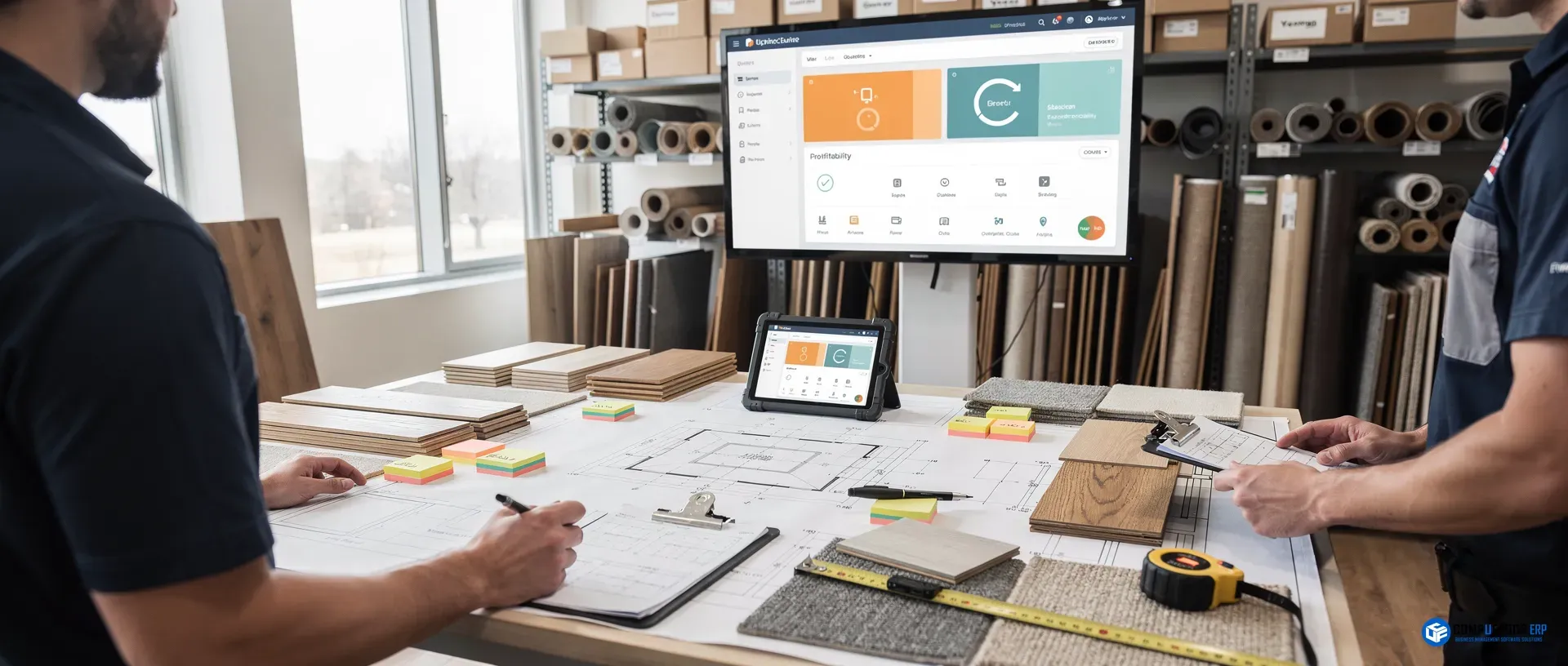
Upgrading flooring management software eliminates costly manual errors, inaccurate job costing, and missed sales commissions. Legacy systems lack flooring-specific measurements like square yards and linear feet, forcing contractors to rely on generic accounting tools. Modern ERP solutions automate lead tracking, quote preparation, and contractor payments, delivering tighter inventory controls and instant profitability insights that directly improve operational efficiency.
Key Takeaways
-
Legacy systems lack flooring-specific measurements like square yards and linear feet, forcing reliance on generic accounting tools.
-
Fragmented systems create compounding inefficiencies that erode margins on every project through hidden operational leaks.
-
Manual conversions of square feet, square yards, and linear feet introduce risk, with miscalculated waste factors erasing thousands in margin.
-
Generic POS systems ignore flooring attributes like carpet roll-numbers, caliber, shade variation also known as dye-lots, and batch number, causing returns and eroding customer trust.
What Do Outdated Software Problems Really Cost?
Outdated software problems drain profitability through hidden operational leaks. Fragmented systems create compounding inefficiencies that erode margins on every project. The true cost extends beyond lost time to include missed revenue opportunities and strained customer relationships.
Many flooring businesses reach a point where spreadsheets, whiteboards, and disconnected tools stop supporting daily operations. As job volume increases, these makeshift systems buckle under the weight of growing complexity. The damage accumulates gradually until daily work becomes harder to manage.
How Do Disconnected Tools Impact Daily Flooring Operations?
Tracking estimates and invoices becomes chaotic when information lives in separate silos. Coordinating installers across multiple job sites grows error-prone without centralized scheduling. Inventory management suffers as stock levels remain invisible to the estimating team, and customer communication breaks down when no single source of truth exists.
These problems do not appear overnight. They build incrementally, eroding team morale and customer confidence with each missed detail.
What Does a Modernized Flooring Business Gain?
Flooring management software streamlines operations by integrating business processes into a single platform. The alternative leaves critical functions scattered across incompatible tools, multiplying the risk of costly mistakes. A modernize flooring business approach replaces this fragmentation with unified workflows.
Comp-U-Floor ERP unifies estimating, quoting, inventory, scheduling, project tracking, CRM, and accounting into one integrated system. This consolidation eliminates duplicate data entry and the errors it spawns. Flooring contractors gain accurate job costing visible directly on the proposal screen, while showroom managers process cash-and-carry sales without switching between applications.
The decision to upgrade flooring software transforms how a company captures revenue. Integrated platforms deliver flooring software benefits that disconnected tools simply cannot match. Every estimate flows seamlessly into job costing, every material order updates inventory in real time, and every customer interaction draws from a complete project history.

Why Does Generic Software Fail Flooring Businesses?
Generic accounting platforms lack the measurement logic flooring work demands. Square feet, square yards, and linear feet are the industry’s native units, yet standard software forces contractors into awkward workarounds that breed costly errors. Every manual conversion introduces risk. A single miscalculated waste factor on a large commercial tile job erases thousands in margin before installation begins.
What measurement problems do flooring contractors face with standard software?
Flooring-specific platforms handle square feet, square yards, and linear feet natively. Generic tools default to unit counts or hours, forcing teams to translate every estimate. That friction compounds across dozens of jobs each month.
Inventory control suffers equally. Flooring-specific software provides meticulous tracking and tighter controls that generic accounting tools cannot replicate. Without lot-level visibility across carpet rolls, tile dye lots, and hardwood bundles, stock discrepancies go undetected until the installer arrives on site. The result is delayed jobs and frustrated clients.
Why do multi-location flooring retailers need specialized point-of-sale?
Comp-U-Floor’s multi-store point-of-sale serves ceramic tile, stone, wood, laminates, and carpet retailers and distributors. A generic POS treats every SKU identically. Flooring inventory carries attributes like caliber, shade variation, and batch number that standard systems ignore. When those details go untracked; returns spike and customer trust erodes.
The CRM gap compounds these outdated software problems. Comp-U-Floor ERP includes a built-in CRM designed for flooring professionals, eliminating the need for third-party integrations. Generic setups force businesses to bolt on external tools that never quite sync. Leads stall between systems. Follow-ups get missed. A flooring business determined to modernize flooring business operations must address this fragmentation directly. The decision to upgrade flooring software often starts when owners recognize that flooring retail software transforms daily operations by connecting estimating, inventory, and customer management in one platform. Without that integration, growth stalls under the weight of disconnected tools.

What Should a Modernize Flooring Business Platform Include?
A modernize flooring business platform must unify the entire project lifecycle. It replaces disconnected tools with a single system that tracks leads, generates precise estimates, and converts quotes into jobs without manual re-entry.
What CRM Capabilities Does a Flooring Platform Need?
The platform starts with a robust customer relationship backbone. Comp-U-Floor CRM supports lead tracking, lead qualification, and prospect management. Flooring business owners move each prospect through product selection and estimating stages. The system then handles quote preparation and sales order conversion seamlessly. Without this flow, leads stall and revenue leaks from the pipeline.
How Should the Platform Handle Estimating and Job Details?
Accurate estimating prevents margin erosion on every project. The software generates detailed job estimates, job details, and progress reports. These documents share directly with customers, building trust through transparency. Order entry allows labor lines, comments, and notes to be added to quotes and sales tickets for both residential and commercial installers. A platform lacking these capabilities forces teams to track critical job specifics in separate spreadsheets or memory.
What Mobile and Field Capabilities Are Essential?
Field-ready functionality separates modern platforms from legacy systems. Users generate detailed estimates and invoices via mobile or desktop devices. Payment collection happens on-site, accelerating cash flow and eliminating billing delays. A comprehensive flooring CRM software ties these mobile capabilities back to the central system. Contractors and showroom managers gain real-time visibility whether in the office or at a job site.
Outdated software problems multiply when these components remain disconnected. Manual data transfers introduce errors. Delayed invoicing strains customer relationships. A platform that integrates CRM, estimating, and mobile payments eliminates these friction points. The result is a single source of truth from first contact through final payment.
How Does an Upgrade Improve Profitability and Accuracy?
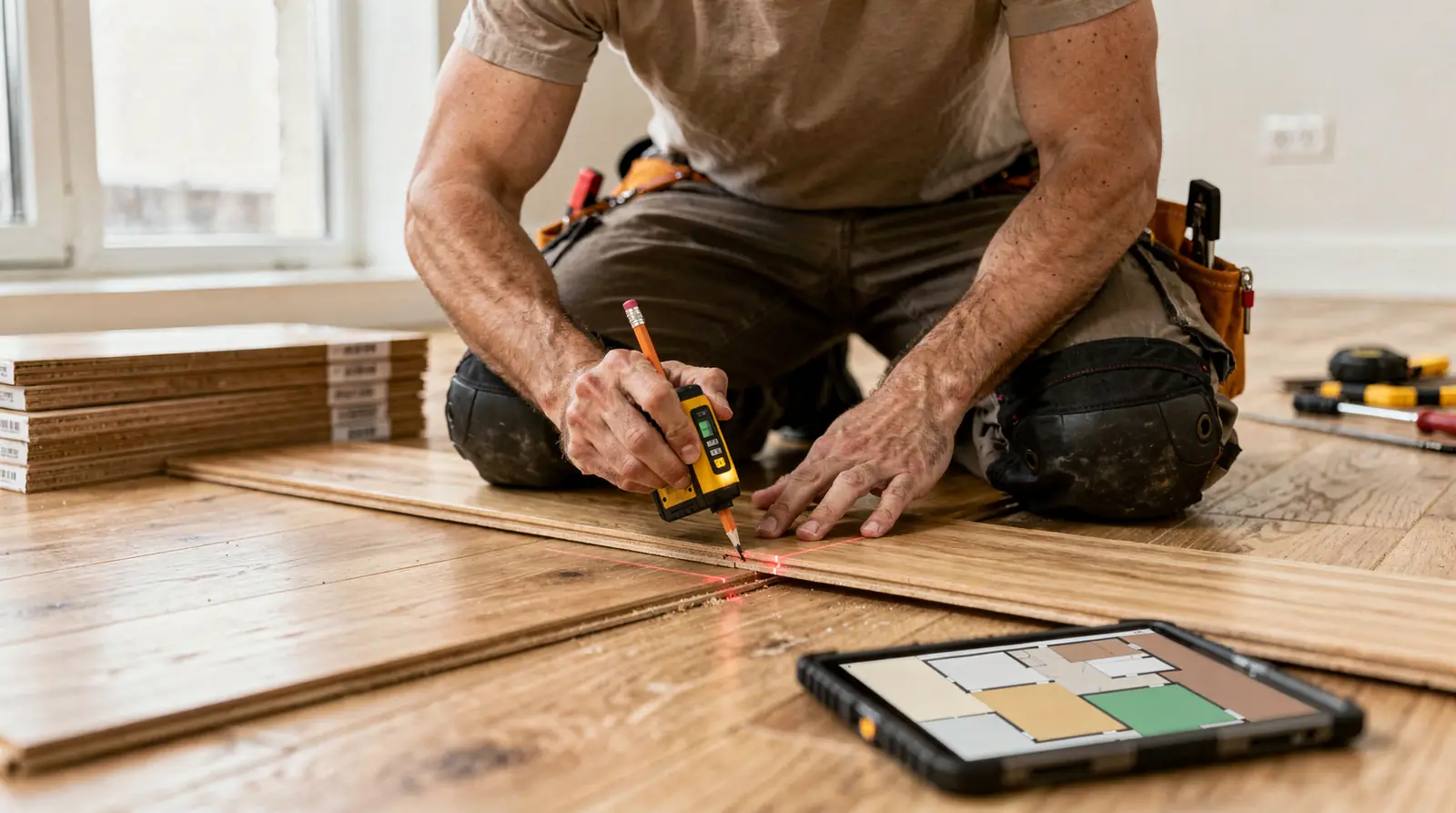
An upgrade flooring software investment transforms job costing from a retrospective guess into a real-time calculation. Flooring-specific platforms deliver instant, accurate job costing directly on the proposal screen, eliminating the margin erosion that plagues manual estimates. Without this precision, contractors lose thousands annually to miscalculated waste factors and overlooked material price changes.
Modernize flooring business operations by replacing error-prone spreadsheets with automated estimation. Accurate estimation reduces project costs and supports stronger business profitability. The platform generates detailed quotes that account for flooring-specific measurements, including square footage, linear feet, and waste-factor math. These calculations happen automatically, removing the human error that drives material overruns on complex tile and hardwood jobs.
What Are the Hidden Costs of Outdated Estimation Methods?
Outdated software problems extend beyond slow processing. Manual takeoffs introduce compounding errors across multi-room projects. A single mismeasurement in a carpet installation cascades into incorrect material orders, delayed schedules, and expensive change orders. Flooring contractors lose both margin and client trust when estimates fail to match final invoices.
How Does Real-Time Job Costing Protect Margins?
Comp-U-Floor’s cloud-based platform makes it easy to generate accurate and detailed estimates, saving time and increasing efficiency. The system calculates costs instantly as measurements enter the proposal, showing exact material and labor figures before the quote reaches the client. This visibility prevents underpricing and flags unprofitable jobs early. The company’s ERP software for project management success consolidates these functions into one workflow, eliminating the data gaps between estimating and accounting.
Comp-U-Floor helps simplify operations, boost accuracy, and support scalable growth across multi-location flooring businesses. Automated calculations replace manual data entry, cutting proposal preparation time while tightening cost controls. The result is a direct improvement in per-job profitability and a measurable reduction in estimation-related write-offs.
How Do You Choose the Right Upgrade Path?
Selecting the right path to modernize flooring business operations starts with a clear-eyed internal audit. Business owners must define specific operational needs before evaluating any platform. Skipping this step leads to costly mismatches. A platform that excels at inventory management but fails at job scheduling creates new bottlenecks instead of removing them.
What Features Should a Flooring Business Prioritize?
Common features of flooring management software include inventory management, job scheduling, and invoicing. Owners should separate essential functions from nice-to-have additions. A showroom operation manager might prioritize point-of-sale speed. A contractor running multiple crews needs robust scheduling tools above all else.
How Important Are Software Integrations?
Integration capabilities require careful scrutiny during any evaluation. The new system must connect with existing accounting tools and supplier catalogs. A disconnected platform forces manual data re-entry. That process reintroduces the very errors a flooring software upgrade is meant to eliminate.
Outdated software problems compound when integrations fail. Data silos grow. Reporting accuracy degrades. Comp-U-Floor ERP, located in Maitland, FL, offers free demonstrations for businesses ready to assess a fully integrated alternative. The demonstration reveals how a unified system replaces fragmented workflows with a single source of truth.
FAQ
What problems do outdated flooring software systems cause?
Outdated software drains profitability through hidden operational leaks, eroding margins on every project with compounding inefficiencies from fragmented systems.
How does generic software fail flooring businesses?
Generic software fails flooring businesses because it lacks native support for flooring-specific measurements like square yards and linear feet, forcing manual conversions that introduce costly errors. It also cannot track flooring-specific inventory attributes such as caliber, shade variation, and batch number, leading to stock discrepancies and returns.
What does Comp-U-Floor ERP unify into one system?
Comp-U-Floor ERP unifies estimating, quoting, inventory, scheduling, project tracking, CRM, and accounting into one integrated system from Maitland, FL.
Conclusion
Upgrading flooring management software eliminates the margin erosion and operational friction that outdated systems create. The decision to modernize transforms disconnected workflows into a single source of truth, protecting profitability from first estimate through final payment. Business owners who act on this evaluation gain tighter cost controls, faster cash flow, and scalable growth across their operations.
Research & Sources
The points in this article draw on Comp-U-Floor ERP’s own product documentation and published resources for flooring businesses evaluating a software upgrade:
-
Flooring software benefits — a closer look at the efficiency gains flooring businesses see from integrated platforms.
-
Why flooring retail software is a game changer — how connecting estimating, inventory, and customer management in one system changes daily operations.
-
Top benefits of implementing flooring management software — the business profitability case for automated estimation.
-
ERP software for project management success — how consolidating estimating and accounting into one workflow closes data gaps.
-
10 tips for choosing the right flooring management software — a feature checklist for evaluating a platform upgrade.
Comp-U-Floor ERP, based in Maitland, FL, offers free demonstrations for flooring businesses that want to see these capabilities applied to their own operations.