
Maximize Efficiency: Benefits of Flooring Software Explained

Running a flooring business means juggling estimates, inventory, installations and customer expectations. Purpose-built flooring management software helps by streamlining workflows, improving accuracy, and keeping stock under control. Below we walk through practical benefits and how the right system can change how your business runs.
Research shows that strong process-management tools are key to meeting customer expectations and improving usability in flooring operations.
Process Management Software for Flooring Industry Efficiency
Control processes to satisfy customers more efficiently by combining digital files with the right IT tools and applications to ensure usability.
Designing and Implementing Process Management in R&D: A Practical Application in the Flooring Industry, 2014
Many flooring companies still wrestle with slow workflows, estimate errors, and inventory headaches. The right software closes those gaps. We cover estimating tools, inventory systems, cloud access, and what an integrated ERP like Comp-U-Floor ERP brings to the table.
How Does Flooring Estimating Software Improve Accuracy and Efficiency?
Estimating software for flooring speeds up measuring and quoting by automating calculations and reducing manual entry. That reduces human error, produces more reliable estimates, and helps you plan materials and labor more precisely — saving time and cutting costs. Digital estimation tools let contractors create professional quotes quickly, improving the customer experience and shortening sales cycles.
Recent studies highlight AI’s role in automating and refining cost estimates for complex flooring systems.
AI for Accurate Flooring Cost Estimates
For multi-storey projects, automating preliminary cost estimates improves consistency and accuracy. Using assembly-level data such as RSMeans helps generate dependable early-stage costs.
Artificial intelligence for developing accurate preliminary cost estimates for composite flooring systems of multi-storey buildings, H Elhegazy, 2022
What Are the Advantages of Precise Measurements in Flooring Estimation?
Precise measurements reduce material waste and unnecessary expense by ensuring you order only what’s needed. That lowers costs and supports sustainability by limiting excess materials. Accurate estimates improve customer trust and help projects finish on schedule. Estimating software keeps measurements consistent across jobs, which leads to cleaner installations and fewer disputes.How Does Automated Quote Generation Streamline Flooring Sales?
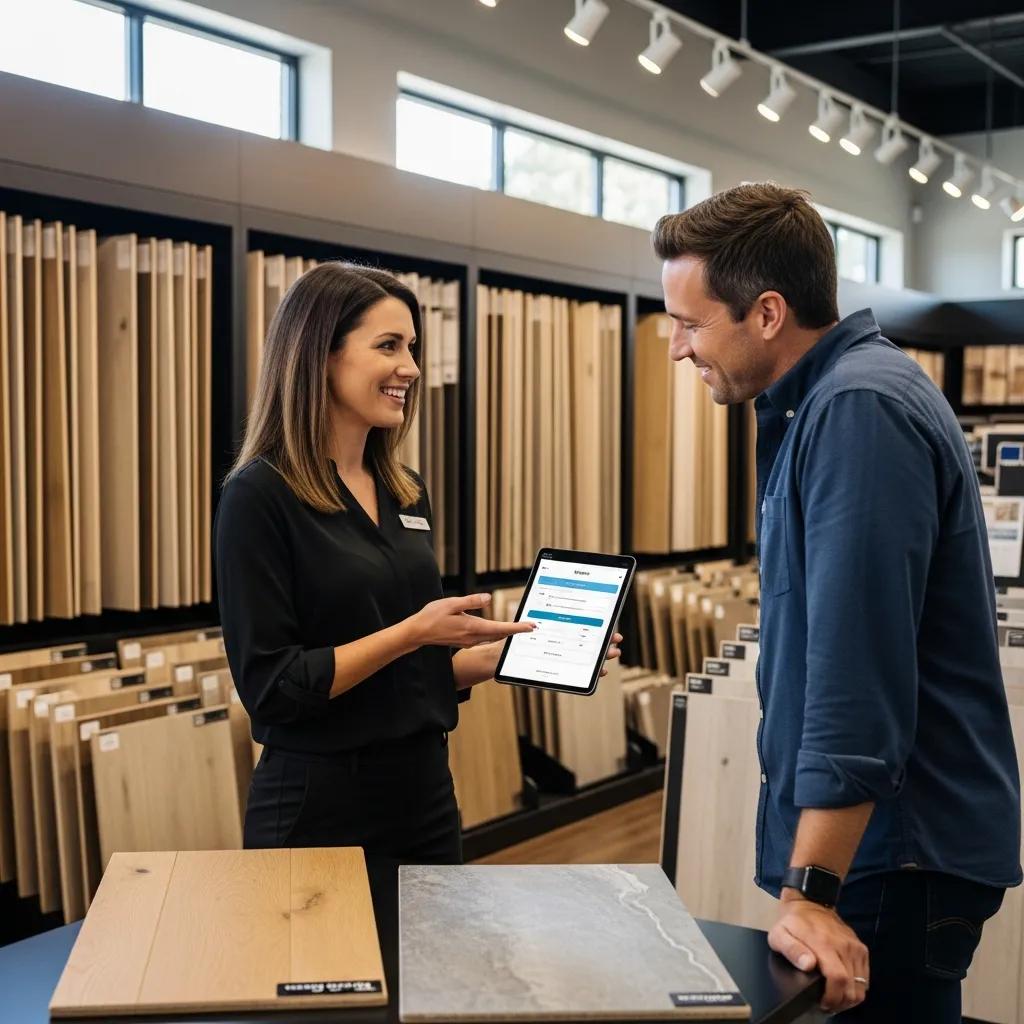
Automated quoting lets sales teams generate accurate proposals in minutes, freeing reps to focus on customers instead of calculations. It lowers the risk of pricing mistakes that cause delays or disagreements. With automated quotes, your team can respond faster, close deals sooner, and deliver a more consistent customer experience.
What Are the Key Benefits of Flooring Inventory Management Systems?
Inventory management systems give you real-time visibility into stock so you can keep optimal levels, avoid overstocking, and prevent costly stockouts. Automating inventory tasks reduces manual work, cuts carrying costs, and ensures the right materials are available when crews need them.
How Does Real-Time Inventory Tracking Reduce Waste and Costs?
Real-time tracking reduces waste and expense by showing exact stock levels and usage patterns. That data helps you adjust ordering, identify slow-moving items, and minimize excess inventory. Improved accuracy also means fewer delivery mistakes and better on-time performance for customers.
Why Is Automated Reordering Essential for Flooring Businesses?
Automated reordering removes the guesswork from purchasing by placing orders when stock drops below set thresholds. This prevents stockouts, reduces manual oversight, and lowers human error in the replenishment process — keeping projects moving without interruption.
How Can Cloud-Based Flooring Software Enhance Business Accessibility and Security?

Cloud-based flooring software gives your team secure access to project data from anywhere with an internet connection — ideal for managers and installers on the road. Modern cloud platforms also include robust security controls to protect sensitive business and customer information.
What Security Features Does Cloud Flooring Software Offer?
Typical cloud security features include data encryption in transit and at rest, role-based access controls, and audit logs that track activity. Together these controls protect client data and help maintain regulatory and contractual compliance.
How Does Remote Access Improve Flooring Project Management?
Remote access lets teams share updates, monitor progress, and make real-time decisions regardless of location. That improves coordination between office staff, field crews, and suppliers so projects stay on schedule and communication remains clear.
Why Choose Integrated Flooring ERP Solutions Like Comp-U-Floor ERP?
An integrated ERP like Comp-U-Floor delivers a single view across estimating, inventory, CRM and operations — cutting duplicate entry and reducing data errors. Bringing these functions together streamlines workflows, improves reporting, and helps managers make faster, better-informed decisions.
Academic research supports ERP systems as a key tool for consolidating data across electronic systems and improving operational efficiency — findings that apply directly to flooring businesses.
ERP Software for Flooring Business Efficiency & Data Management
Collecting and integrating shop-floor data across enterprise systems (ERP, MES, sensor logging) helps increase energy and resource efficiency and supports better decision-making on the production floor.
Integrated shop floor data management for increasing energy and resource efficiency in manufacturing, R Schmitt, 2015
How Does M2 Estimating Software Integration Benefit Flooring Operations?
Integrating M2 estimating with Comp-U-Floor ERP brings live material costs and automated calculations into your estimates. That produces more accurate quotes faster, reduces disputes, and streamlines handoffs between sales, purchasing and production — improving throughput and client satisfaction.
What Industry-Specific Challenges Does Comp-U-Floor ERP Address?
Comp-U-Floor ERP addresses flooring-specific needs like dye-lot tracking to ensure color consistency and detailed inventory insights to reduce waste. Those tools help you control quality while making smarter purchasing and production decisions.
Combined, these features show how targeted software reduces friction across estimating, purchasing and fulfillment — improving both efficiency and the customer experience.
Flooring software can transform operations. Better estimating, tighter inventory control, and cloud access reduce errors, save money, and increase customer trust. Integrated ERP systems like Comp-U-Floor also tackle flooring-specific challenges, helping businesses stay competitive as the market evolves.
Frequently Asked Questions
What types of flooring software are available for businesses?
Common solutions include estimating tools, inventory management systems, and integrated ERP platforms. Estimating tools automate measurements and quotes; inventory systems manage stock and reordering; ERP platforms combine those capabilities with CRM, project management, job costing, and financial reporting for an all-in-one workflow solution.
How can flooring software improve customer satisfaction?
Software speeds up quotes, increases pricing accuracy, and ensures materials are available when needed — all of which reduce delays and disputes. Cloud-based tools also improve communication and transparency, keeping customers informed throughout the project.
What are the cost implications of implementing flooring software?
There are upfront costs for licenses and training, but most businesses see a positive return through reduced waste, fewer errors, faster quoting, and improved staff productivity. Many providers offer scalable plans so you can match functionality to budget and grow over time.
Can flooring software integrate with existing systems?
Yes — many flooring solutions integrate with accounting, CRM, and other business systems to reduce duplicate entry and improve data accuracy. Comp-U-Floor ERP offers a fully integrated solution. When choosing software, confirm compatibility with your current tools to ensure a smooth transition.
What training is required for staff to use flooring software effectively?
Training needs vary by system complexity and staff experience. Most providers offer resources like tutorials, webinars, and user guides; hands-on sessions speed adoption. Comp-U-Floor ERP provides all their training for free, helping teams use the software effectively and unlock its full value.
How does flooring software support sustainability efforts?
By improving measurement accuracy and inventory planning, software reduces over-ordering and material waste. Better visibility into usage and turnover also helps you make more sustainable purchasing decisions while lowering costs.
Conclusion
Adopting flooring business management software streamlines operations, reduces errors and costs, and improves customer outcomes. Tools like modern estimating modules and integrated ERPs deliver measurable efficiency gains and better decision-making. Ready to see the difference? Discover how our flooring software solutions can transform your business today. Contact us today!